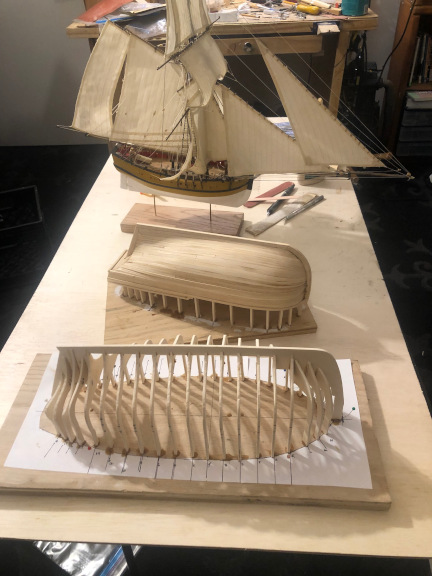
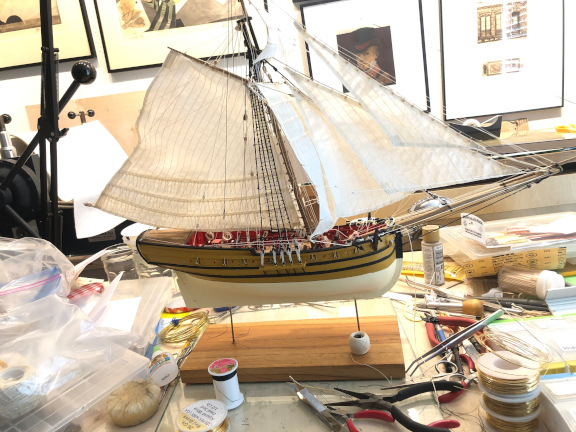
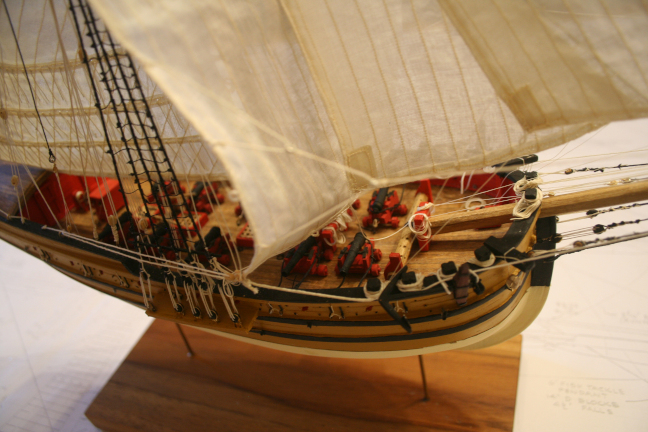
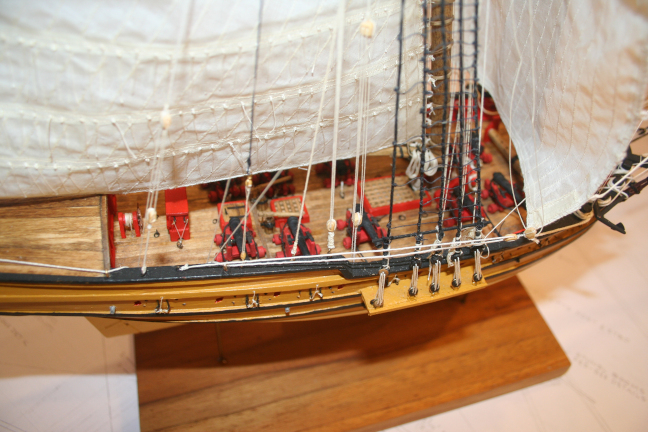
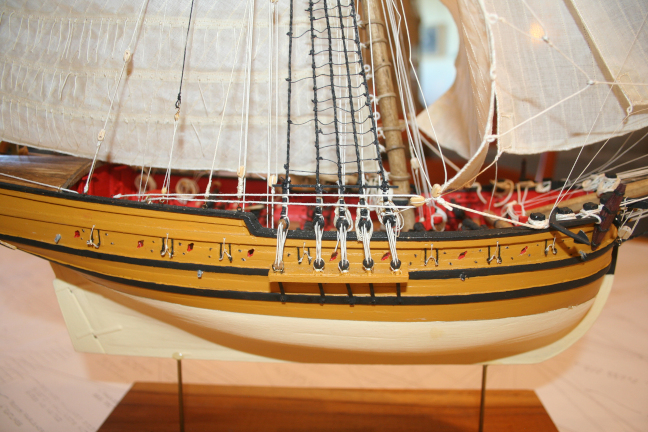
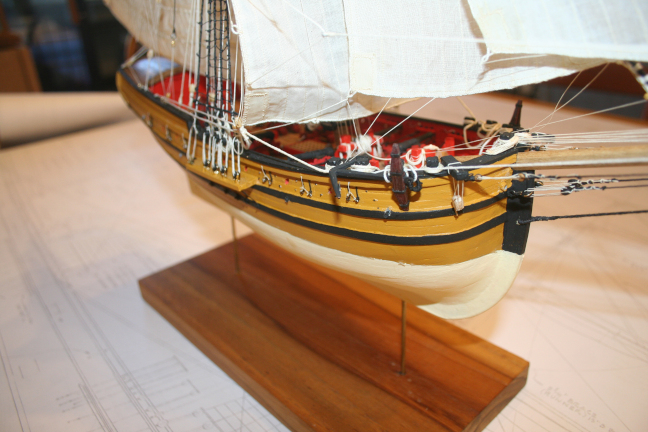
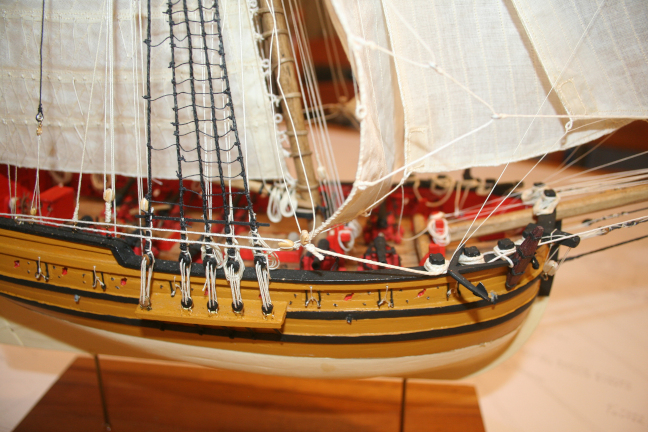
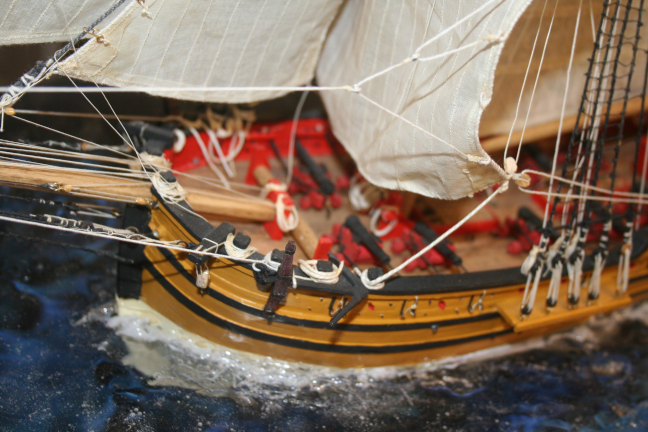
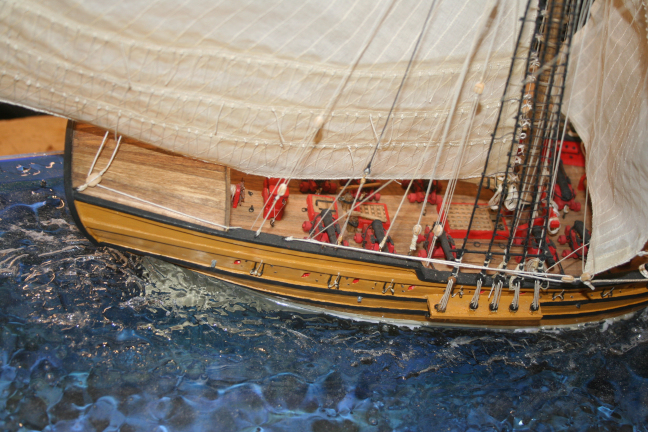
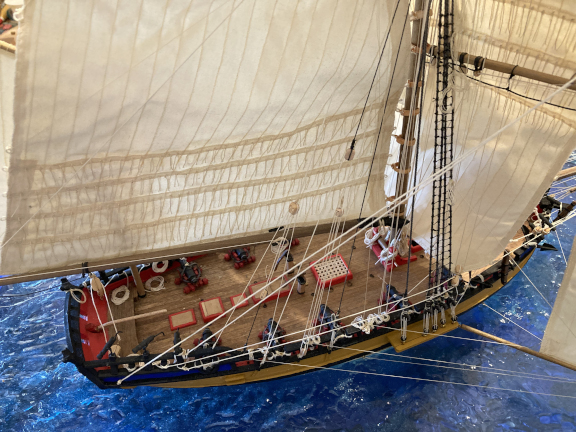
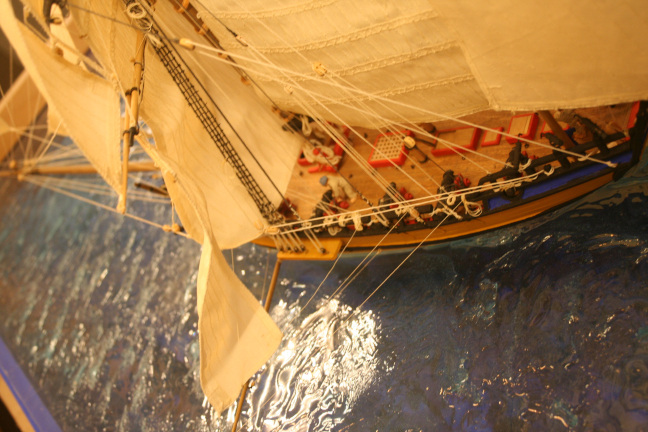
This page is about three models started in 2023 and worked on intermittently
until 2026 when I finally finished. While they were paused on the workbench, I build
the "Flying Fish" and we moved a couple of times back to Santa Fe.
All three models are scratch-built in 1:64 scale (3/16"=1').
The three vessels are:
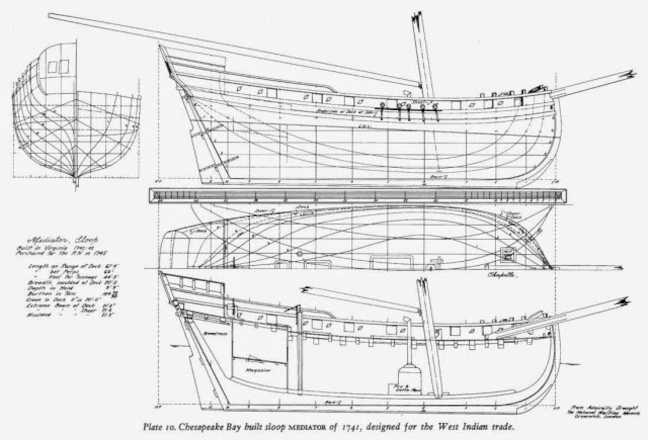
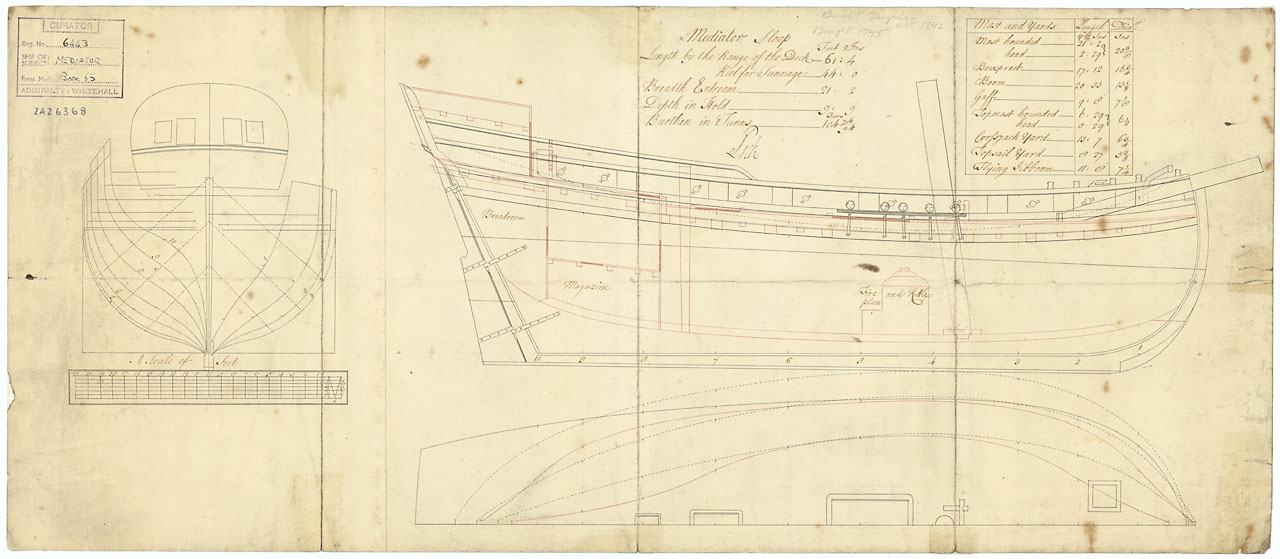
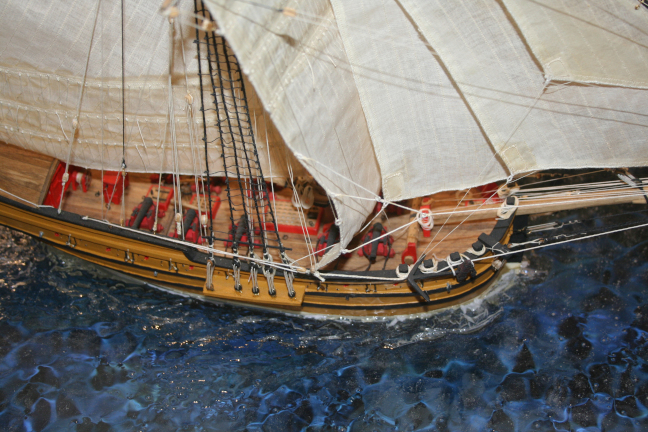
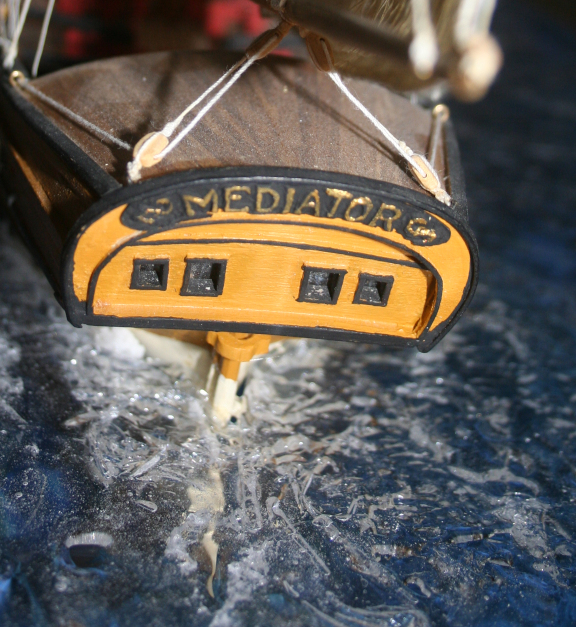
"HMS Mediator", built in Virginia
in 1741 for the West Indies trade, purchased at Antigua in 1745 by the Royal Navy and converted to
an armed cutter. It is a "Bermuda Sloop", a type notable for its speed. It was
armed with ten 4-pounder long guns and 18 1/2 pound swivel guns. She was 61 feet long on deck
with a beam of 21 feet and had complement of 80.
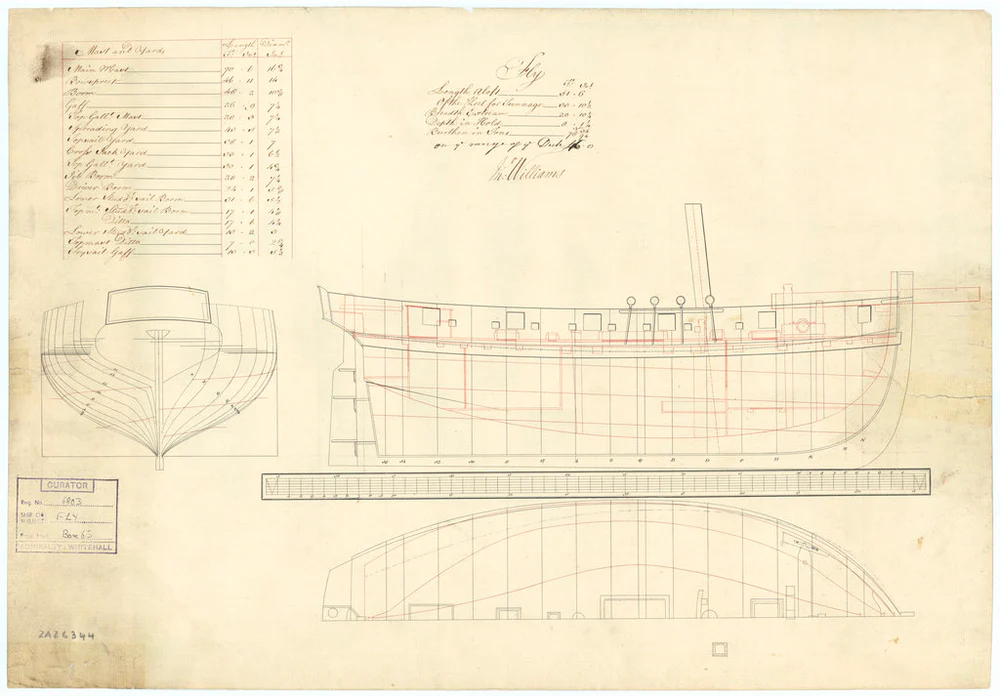
"HMS Fly" of 1763. Another vessel purchased by the Royal Navy for conversion to a cutter.
She was purchased in 1763 and sold off in 1771. Plans for the vessel including a chart of
spar dimensions are from the Greenwich Museum and probably date from when the vessel was
surveyed at time of purchase. "Fly" of 1763 was 47 feet, 6 inches long on deck with a beam
of 20 feet, 10 inches. She was armed with four three pounder guns and ten 1/2 pound swivel guns.
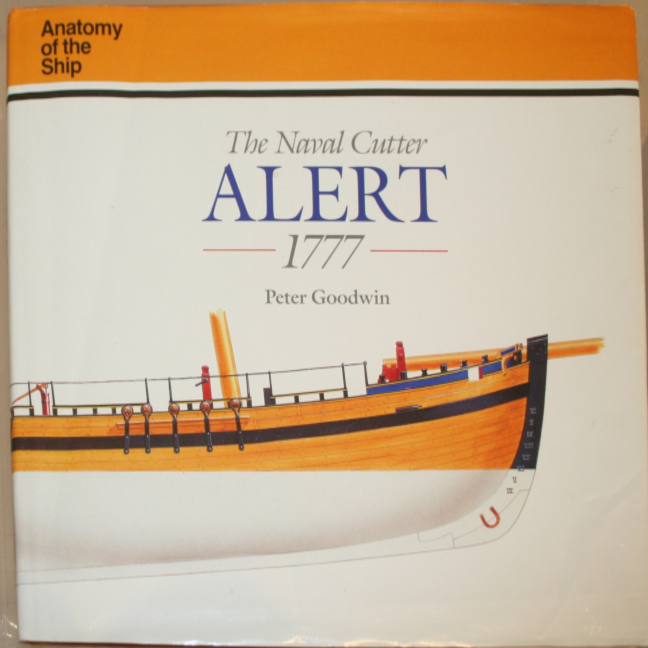
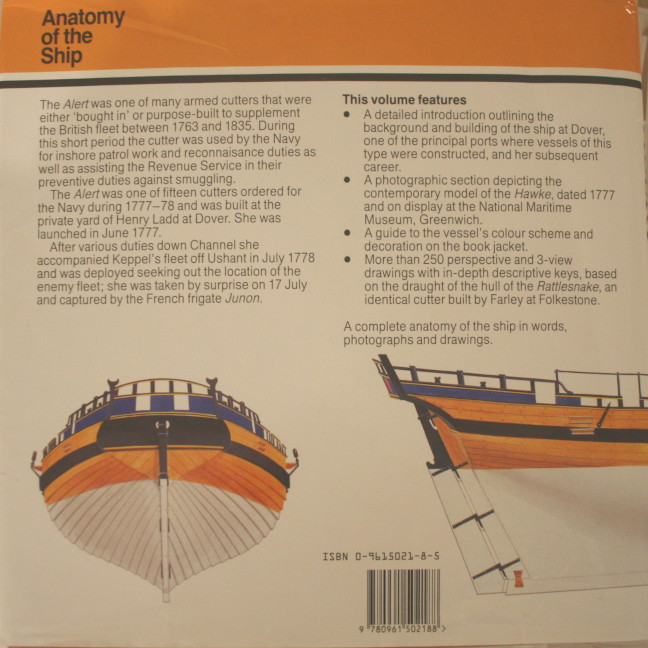
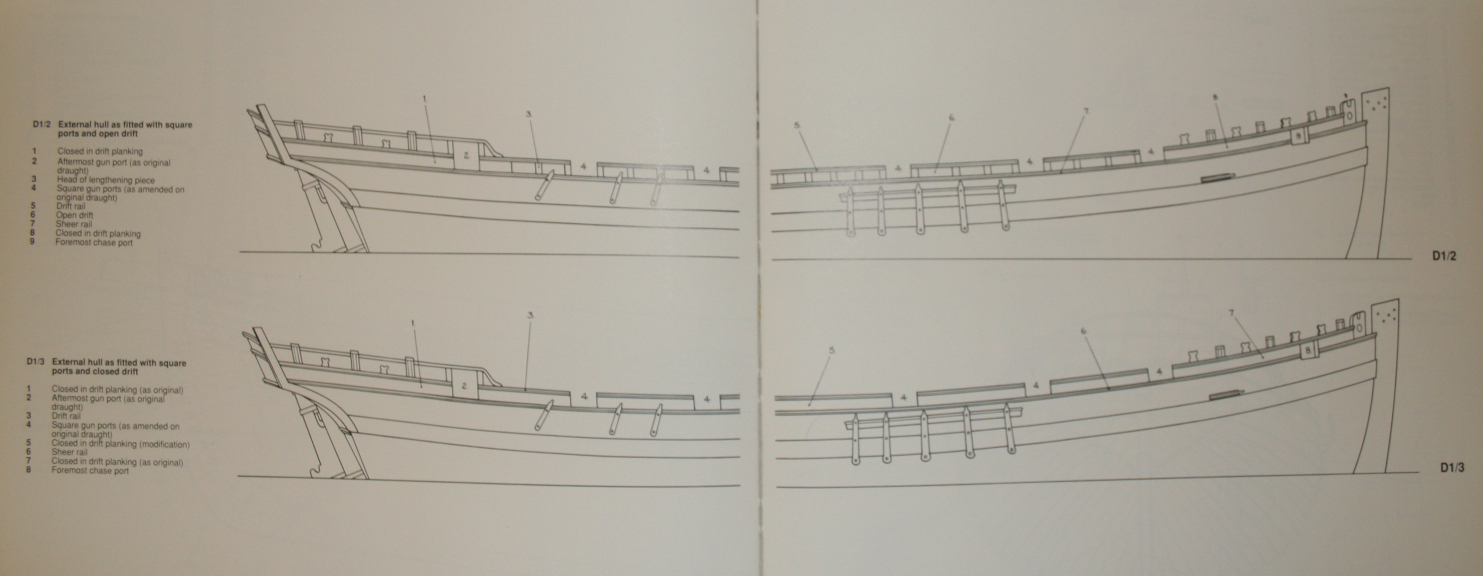
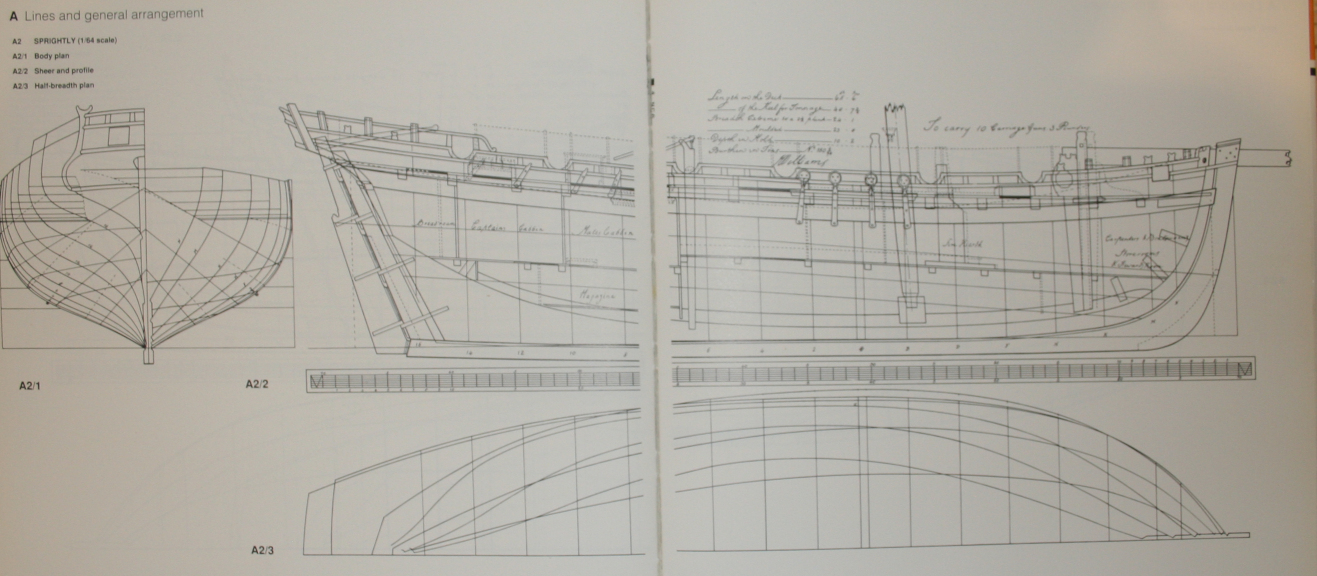
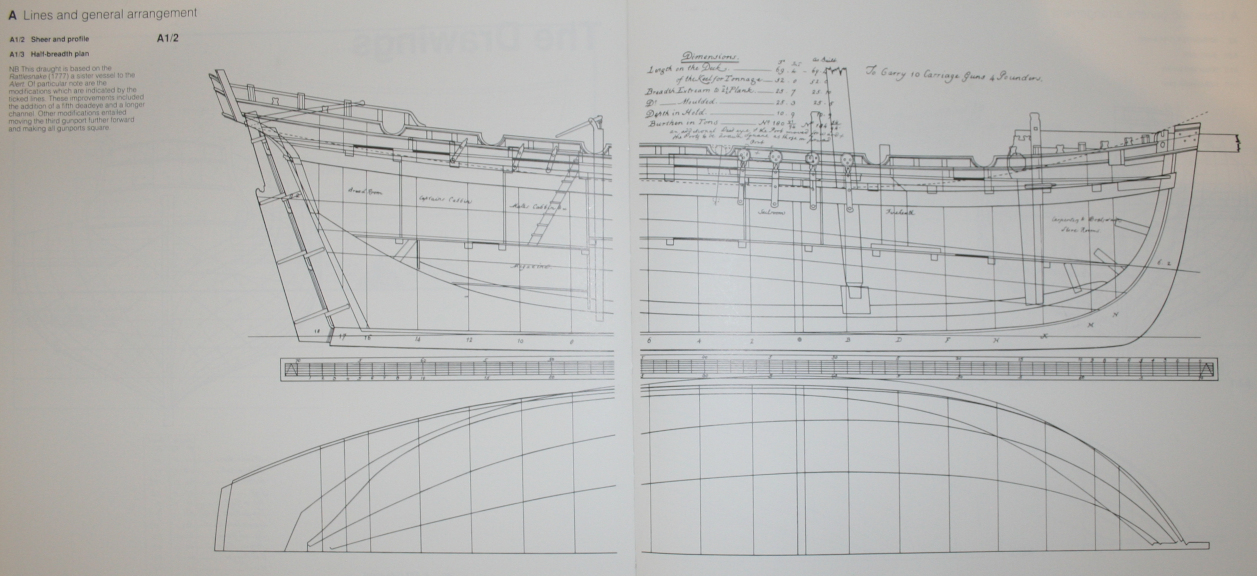
"HMS Alert" class cutter, presumably the "Rattlesnake" or "Spritely" based on the open and
rounded rails. This was the first of the Royal Navy designed and built cutters. The first in
class was "HMS Rattlesnake" of 1777 and there is a surviving contemporary draught in the British
Maritime Museum. The plan and much supplemental information used to build the model is in the
Anatomy of the Ship series "The Naval Cutter Alert 1777" by Peter Goodwin published in North America
by Phoenix Pulications, Cedarburg, WI. The "Rattlesnake" was 69 feet, 4 inches on deck with breadth
of 25 feet 7 inches. She carried ten four-pounder cannon and ten 1/2 pounder swivel guns originally
and the armament was later updated to ten six-pounder cannon. Complement was sixty men and officers.
The Goodwin book includes lines both the versions with roound gunports in the railing and for
the square version. In addition, some of the class were clinker built. The spar and sail plan and rigging
was conjectural, based on contemporary models and on then current usage for small cutters. The rigging design
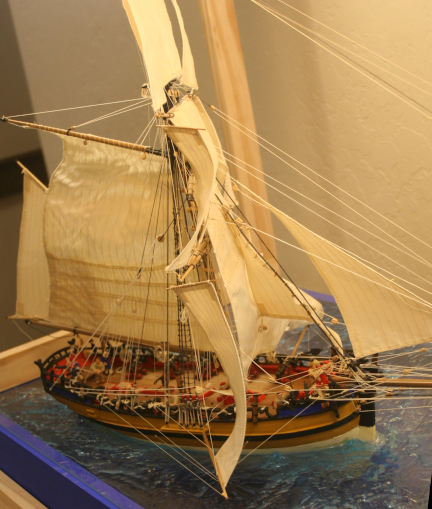
is similar to that of the "Fly" of 1763 and is notable for several reasons. First, the bowsprit is
mounted nearly horizontally and can be adjusted in length. This greatly increased the forward head
space and with the addition of a long jib boom, accomodates greater head sail area. Second, the topmast
is mounted abaft the mainmast head.Third, there is both a main squaresail athwartships as well as a
main fore-and-aft sail, much like a gaff mainsail on a sloop. And lastly, the main squaresail is
mounted on its yard but there is an additional "spreader" yard beneath that main yard. The sheets of the
topsail run to the spreader yard which also carries the lower stunsail booms rather than the main yard.
Because the gaff mainsail is secured to the mast by hoops, both the spreader yard and main yard are
set "flying", lacking direct fastening to the mast, which would impede travel of the hoops, and instead
carried on slings from the mast head. The topsail is also unusual as it is mounted on its yard but
extends past the main yard to the spreader yard. Both "Fly" and "Rattlesnake" are modeled with
stu'n's'ls and with supplemental sail to the main gaff sail, a "ringtail" on the "Fly" and a
separate "mizzen" sail on a small mast mounted toward the stern of "Rattlesnake.
The common characteristic of these three vessels appears to be the desire for speed under sail. Although
the Bermuda Sloop rig persists largely unchanged to this day, the rather complicated and likely
fragile design of the "Fly" and the "Alert" class passed rather quickly into history.